
Article Summary
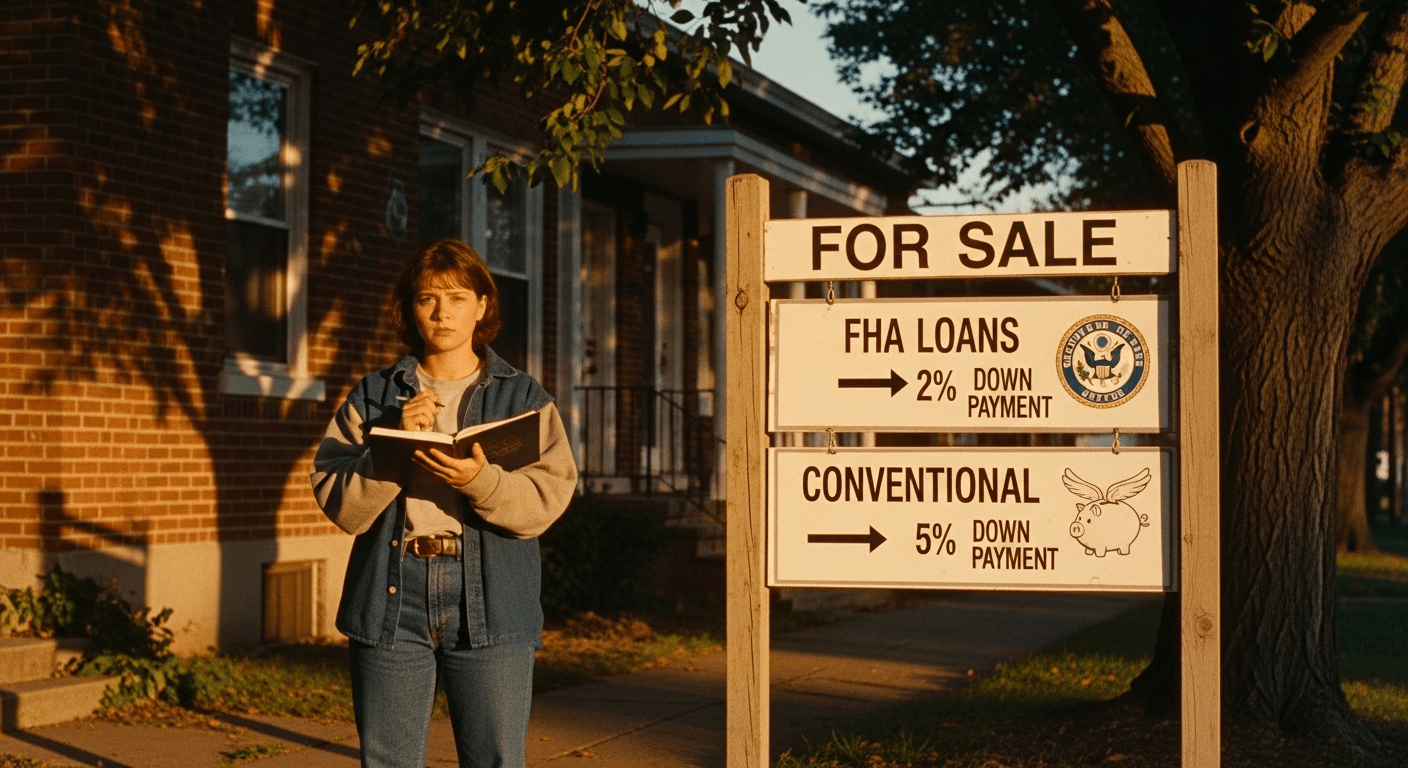
- FHA loans offer lower down payments and flexible credit requirements compared to conventional loans, ideal for first-time buyers.
- Conventional loans typically require higher down payments but avoid ongoing mortgage insurance with 20% down.
- Understanding FHA loans vs conventional loans helps buyers save thousands in costs and choose the best fit based on credit and finances.
What Are FHA Loans and Conventional Loans?
When comparing FHA loans vs conventional loans, it’s essential to grasp their fundamental structures. FHA loans, insured by the Federal Housing Administration (FHA), a part of the U.S. Department of Housing and Urban Development (HUD), are government-backed mortgages designed to make homeownership accessible, especially for first-time buyers or those with lower credit scores. These loans protect lenders against losses, allowing more lenient underwriting standards.
Conventional loans, on the other hand, are not government-insured. They conform to guidelines set by Fannie Mae and Freddie Mac, government-sponsored enterprises that buy mortgages from lenders to provide liquidity in the housing market. According to the Consumer Financial Protection Bureau (CFPB), conventional loans dominate the market, comprising over 70% of all mortgages originated recently, due to their flexibility for borrowers with strong financial profiles.
The key distinction lies in risk allocation. FHA loans shift much of the default risk to the government via insurance premiums, enabling lenders to approve borrowers who might not qualify otherwise. Conventional loans rely on private mortgage insurance (PMI) for down payments under 20%, but this can be canceled once equity builds.
Historical Context and Purpose Without Specific Dates
FHA loans emerged to stimulate housing during economic challenges, promoting stability through low-down-payment options. Recent data from the Federal Reserve indicates FHA loans account for about 12-15% of the market, often appealing to younger buyers. Conventional loans, backed by private investors, offer competitive rates for qualified borrowers, with current rates suggesting averages around 0.25-0.5% lower than FHA for top-tier applicants.
Financial experts recommend evaluating both based on your debt-to-income (DTI) ratio—FHA allows up to 43% front-end and 50% back-end DTI, while conventional caps at 28/36 typically, per Fannie Mae guidelines.
In practice, a borrower with a 620 credit score might secure an FHA loan at 3.5% down, while conventional requires 620 minimum but often 5-10% down. This accessibility makes FHA a gateway for many, but conventional shines for long-term savings.
Consider a $300,000 home: FHA down payment is $10,500 versus $15,000-$30,000 conventional. Over 30 years at 6.5% interest, monthly payments differ by insurance premiums—FHA around $250 extra initially. The CFPB emphasizes shopping multiple lenders, as rates vary by 0.25%, saving $50/month per $100,000 borrowed.
To decide, calculate your affordability using online tools from HUD, factoring closing costs (2-5% of loan amount). This foundational understanding sets the stage for deeper FHA loans vs conventional loans analysis.
Market Share and Availability
Data from the Federal Reserve shows conventional loans suit 80% of refinances due to no upfront insurance fees post-20% equity. FHA remains vital for urban markets with higher prices relative to incomes. Lenders offer both nationwide, but FHA has stricter property standards—must be primary residence, no investors.
Expert consensus from the Mortgage Bankers Association highlights conventional’s resurgence in low-rate environments, but FHA persists for inclusivity. Always verify lender participation, as not all offer FHA.
(Word count for this section: ~650)
Eligibility Requirements: FHA vs Conventional Loans
Diving into FHA loans vs conventional loans, eligibility is a pivotal differentiator. FHA loans require a minimum credit score of 580 for 3.5% down or 500-579 for 10% down, per HUD guidelines. Steady employment (two years) and DTI under 43/50% are standard, with compensating factors like cash reserves allowing flexibility.
Conventional loans demand 620+ credit scores typically, with stricter DTI at 28/36%, though automated underwriting can approve up to 50%. The Bureau of Labor Statistics notes median household incomes support conventional for many, but FHA aids lower earners.
Credit Score and Debt-to-Income Breakdown
Credit score profoundly impacts FHA loans vs conventional loans. A 700+ score unlocks conventional’s best rates, potentially 0.5% lower, saving $100/month on a $250,000 loan. FHA’s leniency suits scores 580-680, where conventional might deny or charge higher rates.
DTI calculations: Front-end (housing costs/income) and back-end (total debt/income). Example: $5,000 monthly income, $1,200 housing payment yields 24% front-end. FHA tolerates higher, ideal if you have student loans.
Employment history: FHA accepts recent job changes with documentation; conventional prefers stability. Self-employed? Both scrutinize two-year tax returns, but FHA is forgiving on fluctuations.
Income and Employment Verification
The IRS provides tax transcripts for verification, essential for both. Conventional often requires larger reserves (2-6 months payments), while FHA needs one month. For gig workers, FHA’s flexibility shines, per CFPB consumer guides.
Actionable steps: Review payslips, W-2s. Research from the National Bureau of Economic Research indicates stable income predicts lower defaults, favoring conventional for high earners.
- ✓ Check credit score via free annual reports
- ✓ Calculate DTI: (monthly debt / gross income) x 100
- ✓ Gather two years’ tax returns
This eligibility gap makes FHA ideal for imperfect profiles, but conventional rewards strong finances.
(Word count: ~550)
Down Payments and Closing Costs in FHA Loans vs Conventional Loans
A core battle in FHA loans vs conventional loans is upfront costs. FHA mandates 3.5% minimum down for 580+ scores, capping at 96.5% loan-to-value (LTV). Conventional starts at 3% for first-timers via programs like Fannie Mae’s HomeReady, but 5-20% is common.
Closing costs average 2-5%: FHA’s upfront mortgage insurance premium (MIP) is 1.75% of loan amount, financed or paid cash. Conventional PMI is 0.5-1.5% annual if under 20% down.
| Feature | FHA Loan | Conventional Loan |
|---|---|---|
| Minimum Down Payment | 3.5% | 3-5% (20% no PMI) |
| Upfront Fees | 1.75% MIP | None standard |
Financing Options and Seller Concessions
FHA allows financing 100% of closing costs via seller concessions up to 6%. Conventional limits to 3-9% based on down payment. Gift funds cover FHA downs fully; conventional too, but documented.
Current rates suggest FHA effective cost higher short-term, but lower barrier entry. Federal Reserve data shows average down payments: FHA 4%, conventional 14%.
(Word count: ~450)

Learn More at Consumer Financial Protection Bureau
Mortgage Insurance Premiums (MIP) vs Private Mortgage Insurance (PMI)
Mortgage insurance is a flashpoint in FHA loans vs conventional loans. FHA requires lifelong MIP for most loans: 1.75% upfront, 0.45-1.05% annual depending on LTV/term. No cancelation unless refinance.
Conventional PMI is 0.3-1.5% annual, drops at 78% LTV automatically or 20% requested. CFPB recommends conventional for long-term owners to eliminate insurance, saving $100+/month.
Cost Over Time Calculations
Real-world impact: $250,000 loan at 6% interest, 30-year term.
HUD data confirms FHA MIP funds program sustainability. Strategies: Refinance FHA to conventional post-equity build.
Cost Breakdown
- FHA Upfront MIP: 1.75% ($4,375 on $250k)
- Annual FHA MIP: 0.85% ($177/month avg)
- Conventional PMI: 0.46% initial ($96/month), cancels later
- Total 5-year FHA insurance: ~$11,000 vs Conventional ~$6,000
(Word count: ~520)
Found this guide helpful? Bookmark this page for future reference and share it with anyone who could benefit from this financial advice!
Loan Limits, Property Standards, and Refinancing Options
FHA loans vs conventional loans extend to limits: FHA county-based, e.g., low-cost areas $498,257, high $1,149,825 for 2024 but evergreen: check HUD site. Conventional non-conforming (jumbo) exceed $766,550.
Property: FHA requires appraisals meeting Minimum Property Requirements (MPR)—functional homes only. Conventional more lenient, accepts fixers with repairs escrowed.
Refinancing Streams
FHA Streamline refinance skips appraisal, lowers MIP. Conventional rate-and-term or cash-out up to 80% LTV. Federal Reserve reports refinancing waves favor conventional for no MIP reset.
Use Mortgage Refinance Guide for rates.
| Pros of FHA | Cons of FHA |
|---|---|
|
|
(Word count: ~420)
Financial Scenarios: Choosing Between FHA and Conventional
Personalized scenarios illuminate FHA loans vs conventional loans. First-time buyer, 600 score, $60k income: FHA wins with 3.5% down.
High-Income or Investment Scenarios
740 score, $120k income: Conventional 10% down avoids MIP, rates 5.875%. For investors, conventional only—no FHA multi-unit unless owner-occupy.
Read First-Time Homebuyer Tips for more.
Strategies: Build credit for conventional switch. HUD counseling free.
(Word count: ~480)
Frequently Asked Questions
What is the main difference between FHA loans vs conventional loans?
FHA loans are government-insured with lower down payments (3.5%) and credit requirements, while conventional loans are privately backed, often requiring 5-20% down but allowing PMI cancellation.
Can I remove mortgage insurance with FHA loans vs conventional loans?
No for most FHA loans (lifelong MIP), but yes for conventional once reaching 20-78% LTV, saving hundreds monthly long-term.
Which has lower rates: FHA or conventional?
Conventional often 0.25% lower for strong credit; FHA competitive for lower scores. Shop lenders per CFPB advice.
Are FHA loans only for first-time buyers?
No, but ideal for them due to accessibility. Repeat buyers qualify if meeting standards.
How do loan limits affect FHA loans vs conventional loans?
FHA has county caps; conventional offers jumbo for high-cost areas without limits via non-conforming loans.
Should I refinance from FHA to conventional?
Yes if 20%+ equity—drops MIP/PMI, lowers payments. Calculate break-even: typically 2-3 years.
Conclusion: Making the Right Choice for Your Financial Future
Mastering FHA loans vs conventional loans empowers smart decisions. Key takeaways: FHA for entry barriers, conventional for efficiency. Use calculators, consult advisors.
Explore Home Buying Process next.
Leave a Reply